Arguing in public without shouting
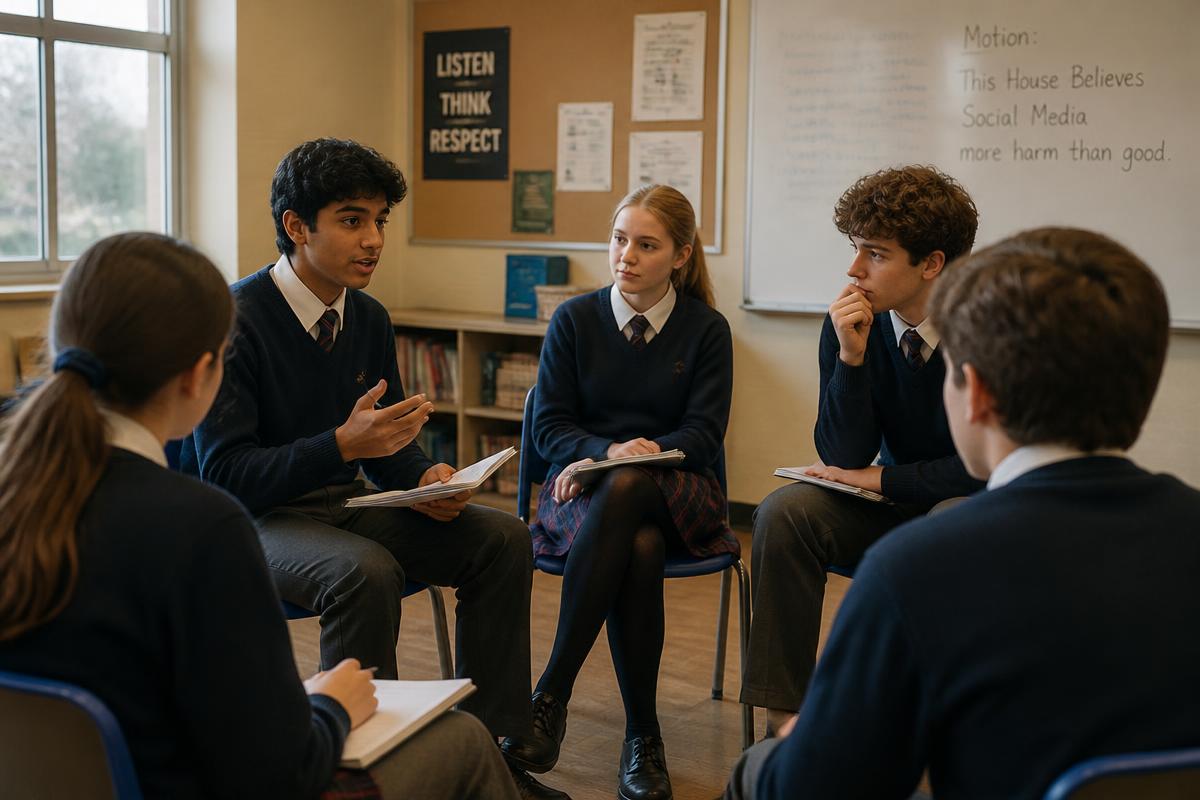
The first debates I ran in my civics class were bad in a predictable way. The three confident students spoke, the rest performed attention, and whoever was loudest at the end was treated as the winner. I had given them a topic and no method.
The rule that changed everything is small: before you disagree, restate the previous speaker's point well enough that they accept your version. It is slow. It is also nearly impossible to do while angry, which is the useful part.
You cannot argue with a position you cannot restate.
We also separated the roles. In any debate some students argue, two take notes on the quality of reasoning rather than the conclusions, and one is responsible for asking what evidence would change the room's mind. Rotating those jobs turned listening into something with a task attached.
The class wrote the rest of the rules themselves in September and put them on the wall: no interrupting, no motives ascribed, no positions attributed to whole groups of people, questions welcome at any time. Rules they wrote survive an argument about immigration in March. Rules I imposed did not.
I no longer promise that the class will agree. What I can promise a parent is that their child will be able to state the strongest version of a position they dislike, which is a rarer skill among adults than it should be.
Rate this story
Please sign in to rate this story.