Designing a lesson that works for everyone
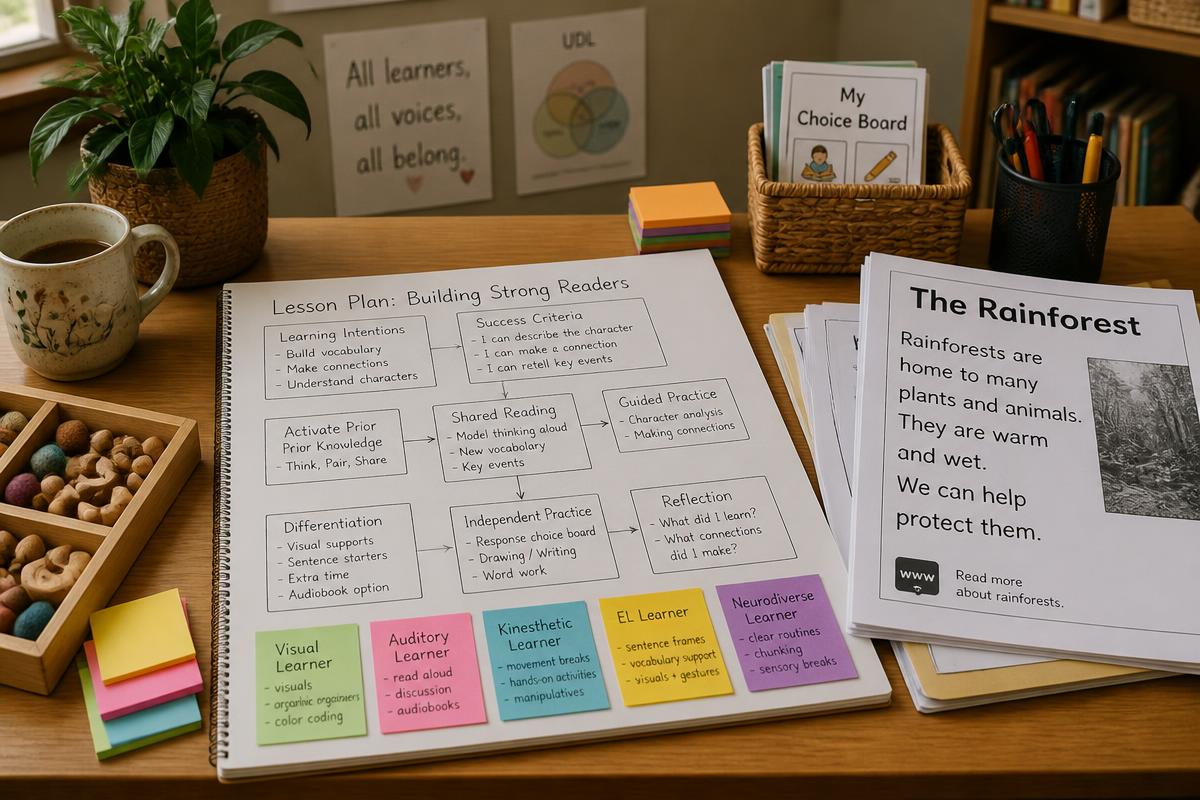
My first attempt at inclusion was a folder of individual adaptations: six children, six plans, printed weekly. It was thorough, well intentioned, and completely unsustainable. By October I was maintaining the folder instead of teaching.
What replaced it was a habit of building one lesson with more than one route through it. The same task, offered as text and as diagram. Instructions said aloud and written on the board in the same words. An example completed before anyone is asked to work alone.
If a support only helps one child, it will be the first thing dropped in a busy week.
None of that is specialist provision, which is exactly why it survives a difficult week. Written instructions help the dyslexic reader, the child who arrived from Syria in March, the one who was in the toilet during the explanation, and the teacher covering my class when I am ill.
Individual support still exists, but it is now reserved for things a general design cannot carry: a specific reading intervention, a hearing loop, a plan for a child whose anxiety peaks at transitions. Fewer plans, actually delivered.
The test I use is simple. If a support only helps one child, it is fragile. If it quietly helps a third of the class, it will still be there in June - and the child it was designed for is no longer the only one using it.
Rate this story
Please sign in to rate this story.