The notebook I ask every student to keep
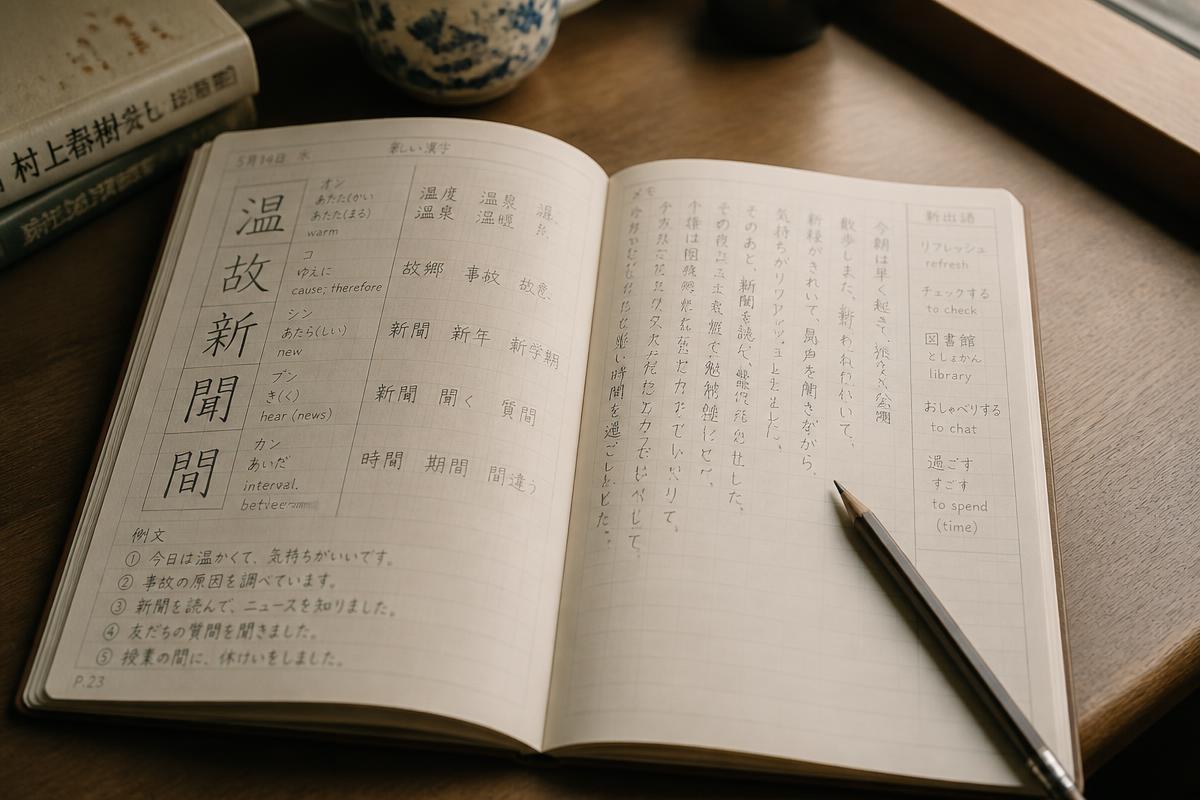
Most learners keep beautiful notebooks that they never open again. Everything goes in: every new word, every grammar point, every example from the textbook. The notebook becomes an archive of the course rather than a tool for the week.
What I ask for instead is small. Two pages at a time, three columns: the thing I could not say, what I said instead, and what a Japanese speaker actually says. Nothing that the textbook already contains is allowed in it.
A notebook full of everything is a notebook that gets read once.
That last rule is the whole design. The notebook is only for the gaps that appeared in real use - the word missing in a phone call, the polite form that came out wrong at work. Those gaps are individual, they repeat, and they are exactly what a lesson should be spent on.
We open it in the first five minutes of every session and choose two entries. Not all of them. Two. The rest wait, and many of them dissolve on their own once a pattern is fixed, which teaches something about priorities that I could not teach directly.
After a term the notebook reads like a portrait of one learner's actual Japanese life: a nurse's handover phrases, a father's conversations at a kindergarten gate. No textbook can be that specific, and no archive of vocabulary would have been reread.
Rate this story
Please sign in to rate this story.